

Permits are the least romantic part of planning a Himalayan trek, but getting them wrong can stop you at the first checkpoint. Nepal’s rules have changed several times since 2023, and much of the information online is out of date. This guide sets out what is required for the main trekking regions at the time of writing.
Fees and rules are set by the government and can change at short notice. If you book with us, we arrange every permit for you and confirm the current figures when you book.
The licensed-guide rule
Since April 2023, the Nepal Tourism Board has required foreign trekkers in most national parks and conservation areas to trek with a licensed guide arranged through a government-registered trekking agency. Solo independent trekking is no longer permitted on routes such as the Annapurna and Langtang treks, and checkpoints ask to see your guide’s details.
The notable exception is the Everest (Khumbu) region. The local Khumbu Pasang Lhamu Rural Municipality issues its own entry permit and, at the time of writing, has not enforced the guide requirement, so independent trekking remains possible there. We still recommend a guide on high-altitude routes, for safety as much as for company.
In practice, this rule mostly affects people who planned to trek alone. If you book a guided trip, nothing changes for you. If you were planning a self-guided trek, budget for a guide or porter-guide and arrange them through a registered agency before you arrive.
Permits are not just paperwork. The fees fund trail maintenance, conservation and the communities you walk through, and the checkpoints are how rescuers know where you are.
Nepal’s visa is separate from your trekking permits. Most nationalities can get a tourist visa on arrival at Kathmandu airport or apply online in advance; make sure it covers your full stay, including any spare days after the trek.
Annapurna region
Treks in the Annapurna region, including Annapurna Base Camp, Poon Hill, Mardi Himal and the Annapurna Circuit, need the Annapurna Conservation Area Permit (ACAP).
- ACAP: NPR 3,000 for foreign nationals, NPR 1,000 for SAARC nationals, valid for a single entry.
- TIMS: the Trekkers’ Information Management System card has been restructured several times since 2023 and its enforcement varies by region. Your agency handles any registration still required.
- Permits are issued in Kathmandu or Pokhara and checked at points such as Birethanti, Ghandruk and Chhomrong.
ACAP covers the whole conservation area, so the same permit works for most popular combinations of routes in the region. The Annapurna Circuit also requires ACAP only, unless you add a side trip into the restricted Nar Phu valley.
Everest region
The Everest Base Camp Trek and other Khumbu routes need two permits:
- Sagarmatha National Park entry: NPR 3,000 for foreign nationals, issued at Monjo or in Kathmandu.
- Khumbu Pasang Lhamu Rural Municipality fee: collected in Lukla. It was NPR 2,000 for many years and rose to around NPR 3,000 in 2024; check the current figure before travel.
- Routes starting below Lukla, such as from Salleri or Jiri, also pass through the Gaurishankar Conservation Area, which has its own fee.
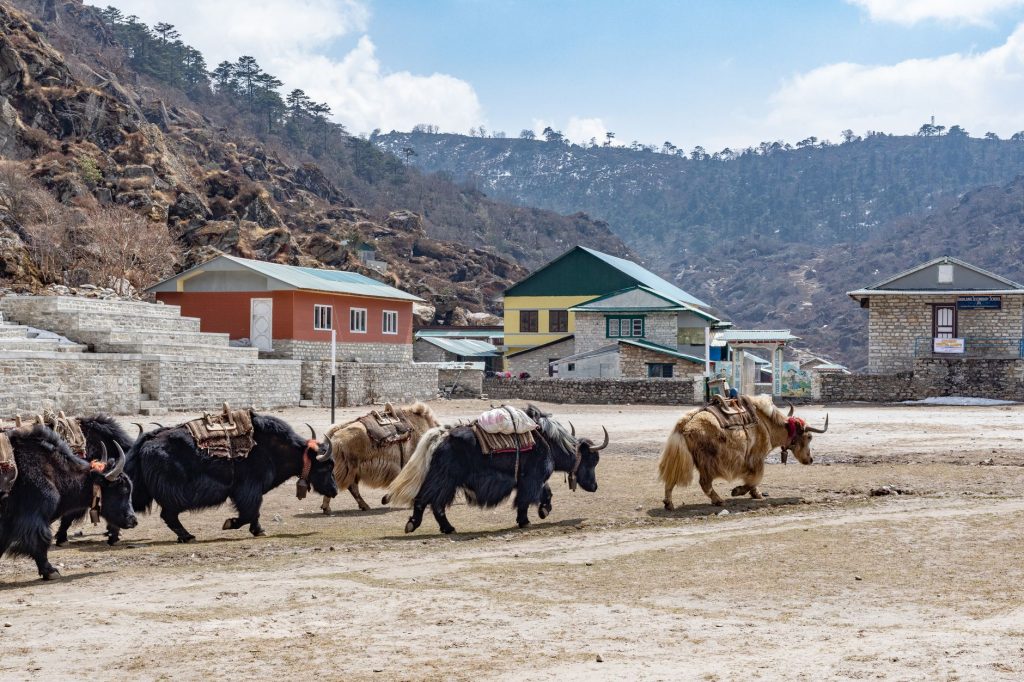
Because Lukla is the main entry point, permit checks in the Khumbu happen at Lukla and Monjo on the way in. If your trip includes a helicopter return or a different exit route, your guide will make sure your permits are stamped correctly.
Langtang, Manaslu and restricted areas
The Langtang Valley, Gosaikunda and Helambu treks require Langtang National Park entry, NPR 3,000 for foreign nationals at the time of writing. As in the Annapurna region, a licensed guide is required.
Some border regions are designated restricted areas, open only with a licensed guide and a permit booked through a registered agency; you cannot obtain these permits yourself. The long-standing rule requiring at least two trekkers was lifted in March 2026, so solo trekkers can now join with a guide.
- Manaslu: the restricted-area permit is charged per week, with a higher rate from September to November than in other months, plus the Manaslu Conservation Area Permit and ACAP for the Annapurna side of the circuit.
- Upper Mustang: since late 2025 the permit has been charged at USD 50 per person per day spent in the restricted area. Previously it was a flat USD 500 for the first ten days. ACAP is also required.
- Tsum Valley, Nar Phu and other restricted areas: have their own weekly fees and are usually combined with conservation-area permits.
Restricted-area permits are issued by the Department of Immigration in Kathmandu and only to agencies, not individuals. Applications need passport copies and the full itinerary, and they take one or two working days, so leave time before your trek starts.
Costs at a glance and practical tips
Permit costs are usually bundled into the price of a guided trek, so check what your quote includes. A good quote lists every permit by name, so there are no surprises at the checkpoint and nothing to pay on the trail apart from your own extras.
As a rough guide, permits for the popular treks in the Annapurna, Everest and Langtang regions add up to roughly USD 20–45 per person at current exchange rates. Restricted-area treks cost considerably more because of the daily or weekly fees. SAARC nationals pay reduced rates, and young children are often exempt.
- Carry your permits somewhere dry and accessible; you will show them several times, and some are stamped again on the way out.
- Keep your permit receipts until you are home, in case of questions from your insurer or at a checkpoint.
- Keep paper copies of your passport and visa as backup.
- Do not try to skip a checkpoint. Fines for trekking without a permit are higher than the permit itself.
- Check the current rules for any route you plan to add on the fly; restricted areas cannot be added on the trail.
Permits are one part of the planning puzzle. Once they are sorted, read our guides to the best time to trek and teahouse life on the trail.