

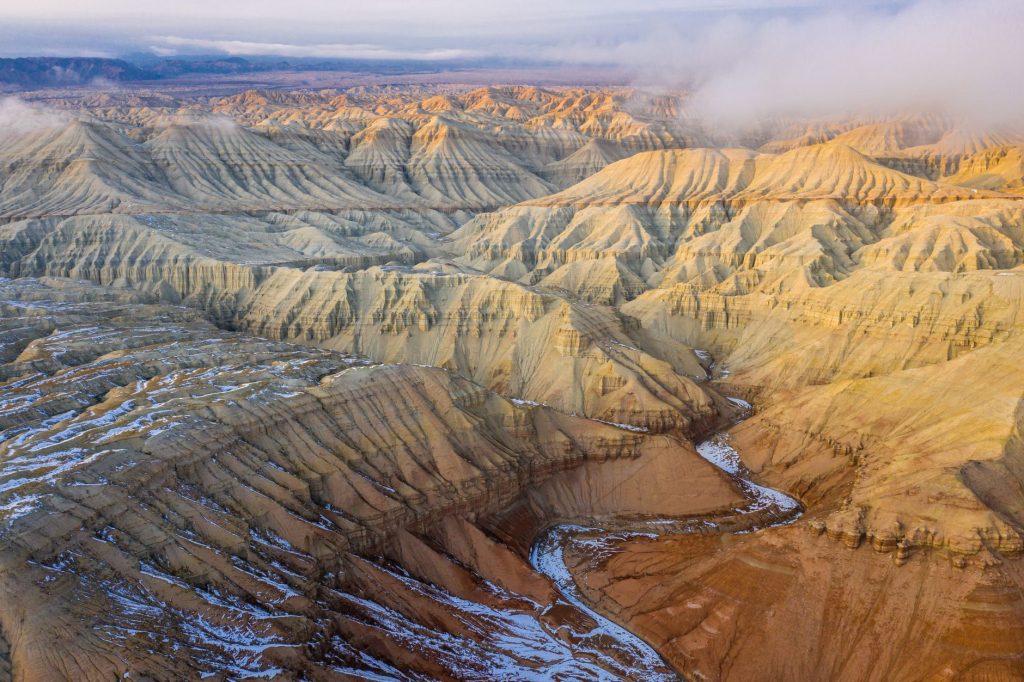
North of the Annapurna and Dhaulagiri ranges, the green hills of central Nepal give way to a high, dry landscape of ochre cliffs, wind-carved canyons and whitewashed villages. This is Upper Mustang, the former Kingdom of Lo, closed to foreign visitors until 1992 and still one of the most culturally intact Tibetan-Buddhist regions in the Himalaya.
Trekking here feels like walking into a different country. Here is what makes Upper Mustang special and how to plan a visit.
The Kingdom of Lo: a brief history
For centuries Mustang controlled a key trade route between Tibet and the Indian subcontinent, with salt and wool moving south and grain moving north. The Kingdom of Lo was founded in the 15th century and its walled capital, Lo Manthang, still stands at around 3,800 metres.
Mustang became part of Nepal but kept its own king, with a ceremonial role, until the Nepalese monarchy was abolished in 2008. Its long isolation, first by geography and later by its status as a restricted area, preserved an extraordinary heritage of monasteries, wall paintings and village life.
The people of Lo, the Lobas, are closely related to the Tibetans across the border in language, dress and religion. Most follow the Sakya school of Tibetan Buddhism, and village life still revolves around the monastery, the fields and the seasonal movement of herds.
Upper Mustang does not look like the Nepal on postcards. It looks like Tibet before the roads arrived: monasteries painted in ochre and white, and silence broken only by wind and prayer flags.
Today Upper Mustang is changing fast. The road, mobile coverage and a growing number of visitors are reshaping daily life, and many young people now study or work in Pokhara and Kathmandu. Seeing it while its traditions remain so strong is one of the most rewarding journeys in Nepal.
Highlights of the trek
- Lo Manthang: the walled capital with its royal palace and the richly painted Jampa and Thubchen monasteries.
- Cave dwellings: thousands of man-made caves cut into the cliffs, some used as homes, meditation cells and burial sites centuries ago. The Chhoser caves near Lo Manthang can be visited.
- Ghar Gompa: one of the oldest monasteries in the region, associated with Padmasambhava.
- Kagbeni: the medieval gateway village where the restricted area begins.
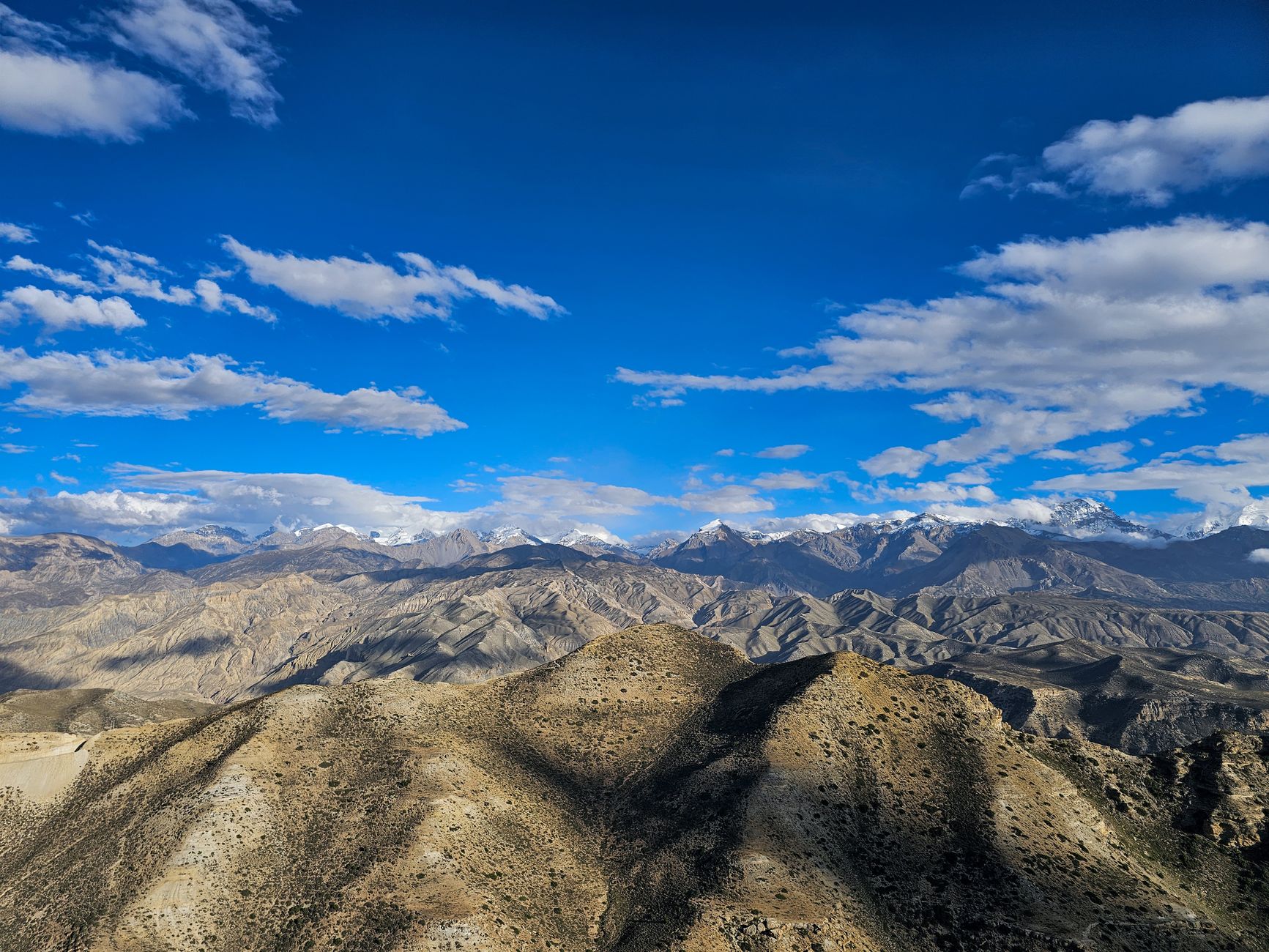
- Landscape: red, grey and gold cliffs, the Kali Gandaki gorge and views of Nilgiri and Dhaulagiri.
Villages along the route, such as Chele, Ghiling, Tsarang and Ghami, cluster around small oases of barley fields and poplar trees, fed by irrigation channels from snowmelt streams. Between them the trail crosses high, windswept passes, some close to 4,000 metres, with long views over the eroded hills.
Restoration work over recent decades has brought Lo Manthang’s monastery murals back to life, and watching the fine detail emerge from centuries of soot is one of the great rewards of reaching the walled city. Allow at least two nights in Lo Manthang to explore it and the surrounding valleys without rushing.
When to visit
Upper Mustang lies in the rain shadow of the Annapurna and Dhaulagiri massifs and receives little rainfall. That makes it one of the few Nepali treks that is genuinely good during the monsoon. The trekking season runs from roughly March to November.
- Spring (March–May): clear skies, warmer days and the Tiji festival in Lo Manthang, usually held in May.
- Summer (June–August): green barley fields in the oases and quiet trails while much of Nepal is in the monsoon.
- Autumn (September–November): crisp air and golden harvest colours; cold nights by November.
- Winter: very cold, with many residents moving south; not recommended for most trekkers.
Our Upper Mustang Tiji Festival Tour is timed to coincide with the three-day festival, when masked monks perform dances celebrating the triumph of good over evil.
Whenever you go, plan for strong sun and big temperature swings. Days can be warm in the sun even in autumn, while nights in Lo Manthang regularly fall below freezing from October onwards.
Permits and practicalities
Upper Mustang is a restricted area. Trekkers must travel in a group of at least two foreigners with a licensed guide, booked through a registered agency. You need both the restricted-area permit and the Annapurna Conservation Area Permit (NPR 3,000).
The restricted-area fee was restructured in late 2025. At the time of writing it is USD 50 per person per day spent in the restricted area, replacing the previous flat fee of USD 500 for the first ten days. Our guide to Nepal trekking permits explains the wider rules.
Facilities are simpler than on the Annapurna Circuit. Lodges are family-run and comfortable, but menus are shorter and hot showers less reliable. Mobile coverage is improving but still patchy, and there are few places to withdraw cash, so bring enough rupees from Pokhara.
Trek or drive?
A rough road now reaches Lo Manthang, which has changed the region. You can walk the classic route, drive in by jeep or combine both. Walking is still the best way to appreciate the landscape and the villages, and many trails avoid the road altogether.
- Classic trek: around 12–14 days from Pokhara, walking from Kagbeni to Lo Manthang and back. See our Upper Mustang Trek.
- Circuit: return via a different route through remote villages on the eastern side of the valley.
- Overland tour: a shorter jeep journey from Pokhara for travellers with limited time.
Most trips start with a flight or drive from Pokhara to Jomsom. Explore the full Mustang region for other ways to visit, including the Jomsom–Muktinath trek in Lower Mustang.
Flights to Jomsom are short and spectacular but often cancelled by afternoon winds or cloud, so they operate early in the morning and a spare day at the end of the trip is wise. The road alternative takes most of a day from Pokhara.