






Everest Base Camp Trek 14 Days | 13 Nights
 6 spring departures left
-
 Everest (Khumbu) Region, Nepal

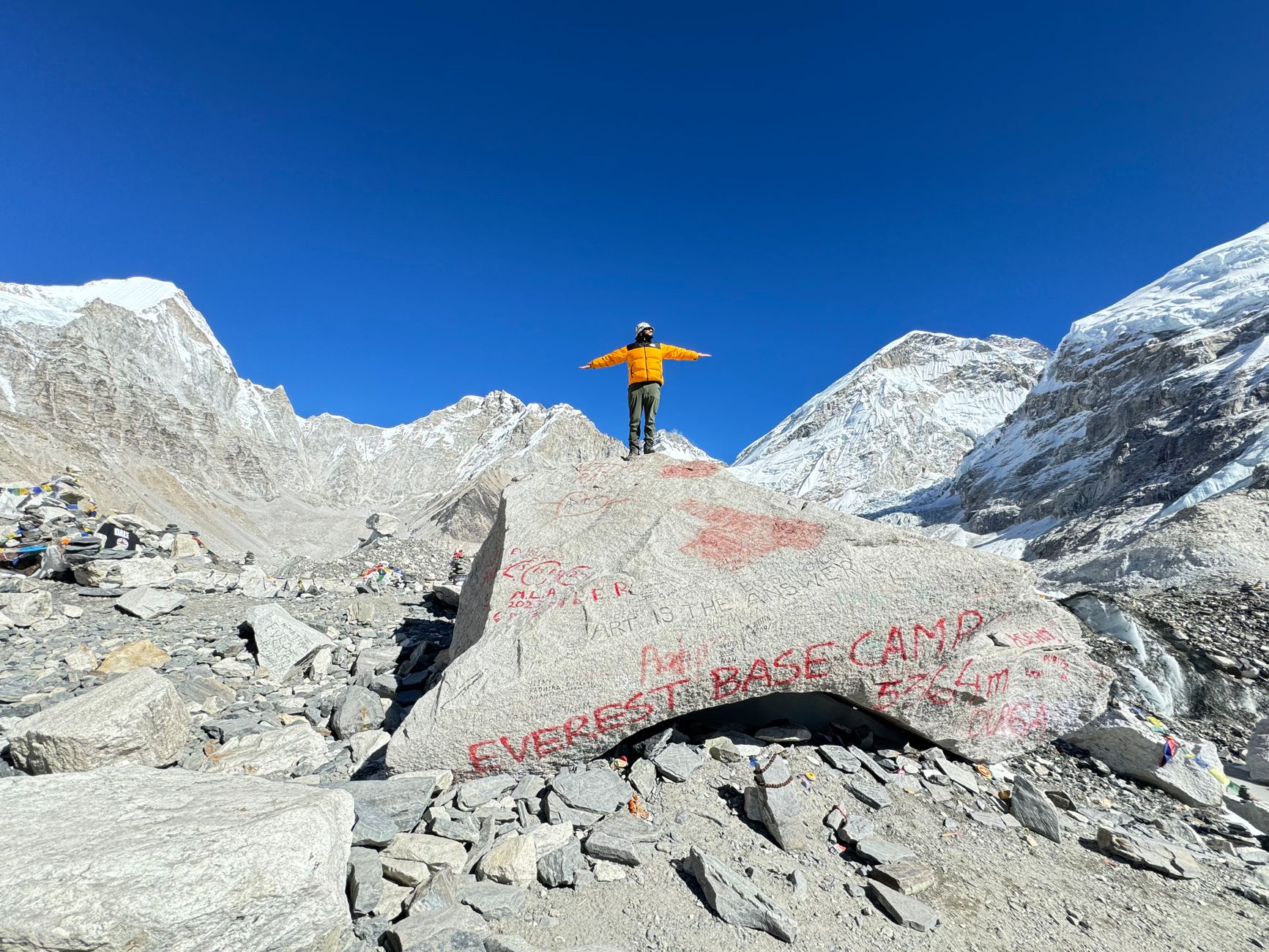
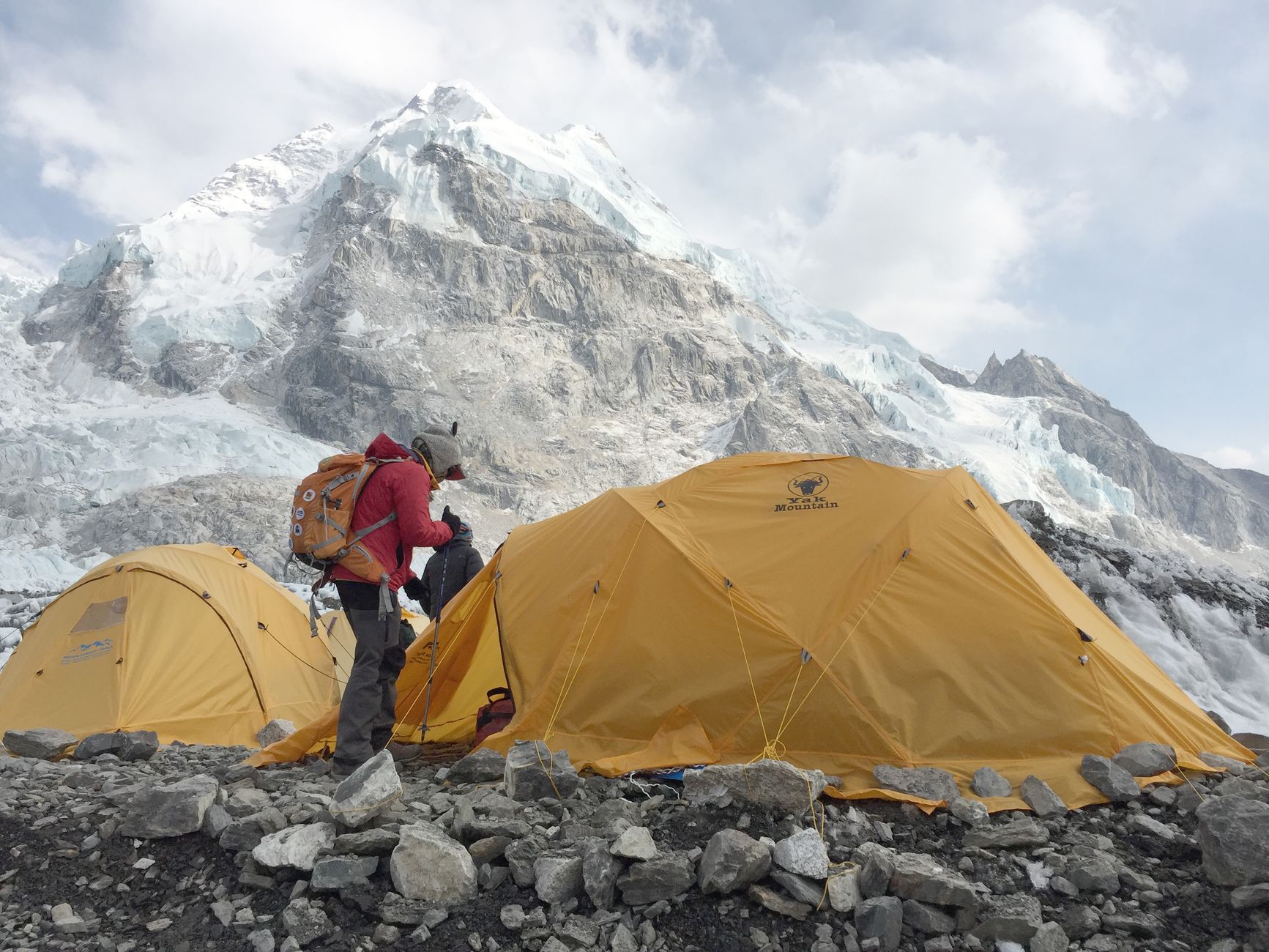
Everest Base Camp at 5,364 m

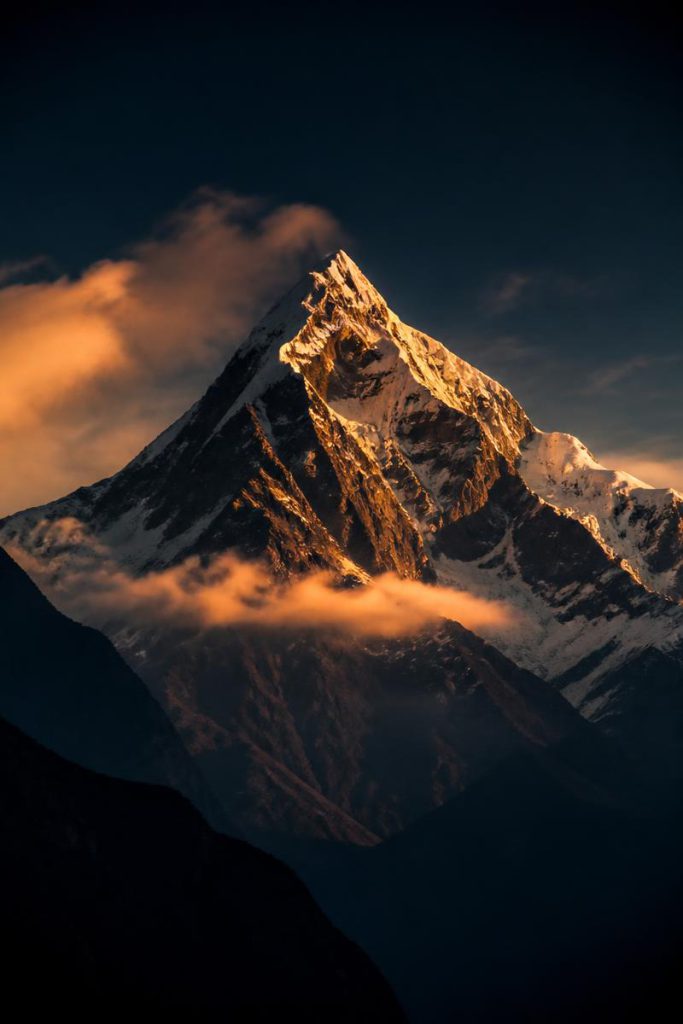
Sunrise over Everest from Kala Patthar

Sherpa life in Namche Bazaar

Tengboche Monastery and Ama Dablam views
The Everest Base Camp Trek is the grandest of the world’s mountain trekking journeys. Following the trails beneath Mount Everest (8,848.86 m / 29,031.7 ft), the tallest mountain on the planet, it is a dream trek for beginners and seasoned hikers alike.
The EBC Trek takes you through natural vistas, high ridges, Buddhist monasteries, suspension bridges, Sherpa and Tibetan-influenced culture, glacial rivers and rugged trails. The route is home to alpine meadows and panoramic views of Ama Dablam, Nuptse, Lhotse and Everest itself, and the trails here feel truly mystical.
Our 14-day itinerary flies you from Kathmandu (or Ramechhap in the busy seasons) to Lukla, then climbs gradually through Phakding, Namche Bazaar, Tengboche, Dingboche and Lobuche, with two acclimatisation days built in. You stand at Everest Base Camp on day 9 and greet sunrise from Kala Patthar (5,545 m), the highest point of the trip, on day 10.
It is a moderately difficult, non-technical trek that fit and well-prepared walkers can complete comfortably. The Elevate Trek team handles permits, flights, teahouse stays and a certified guide, so you can focus on the walk and the mountains.
-
 Duration
 14 Days
-
Nights
13 Nights
-
 Difficulty
 Medium
-
 Max.Elevation
 5,545 m (18,192 ft)
-
 Accomodation
 Hotel, Lodge & Tea house
-
 Meals
Meals Breakfast, Lunch & Dinner during the trek
-
 Group Size
 1 - 12 Travelers
-
 Best Season
 Mar - May, Sep - Nov
-
 Starting Point
 Kathmandu
-
 Ending Point
 Kathmandu
-
 Permit
 Sagarmatha National Park Permit, Khumbu Pasang Lhamu Rural Municipality Permit
-
 Trip Type
 Private or Group
The Everest Base Camp Trek is the grandest of the world’s mountain trekking journeys. Following the trails beneath Mount Everest (8,848.86 m / 29,031.7 ft), the tallest mountain on the planet, it is a dream trek for beginners and seasoned hikers alike.
The EBC Trek takes you through natural vistas, high ridges, Buddhist monasteries, suspension bridges, Sherpa and Tibetan-influenced culture, glacial rivers and rugged trails. The route is home to alpine meadows and panoramic views of Ama Dablam, Nuptse, Lhotse and Everest itself, and the trails here feel truly mystical.
Our 14-day itinerary flies you from Kathmandu (or Ramechhap in the busy seasons) to Lukla, then climbs gradually through Phakding, Namche Bazaar, Tengboche, Dingboche and Lobuche, with two acclimatisation days built in. You stand at Everest Base Camp on day 9 and greet sunrise from Kala Patthar (5,545 m), the highest point of the trip, on day 10.
It is a moderately difficult, non-technical trek that fit and well-prepared walkers can complete comfortably. The Elevate Trek team handles permits, flights, teahouse stays and a certified guide, so you can focus on the walk and the mountains.


Itinerary
Details of the Himalayan routes, landscapes, scenery and memorable places you will pass on the Everest Base Camp Trek, day by day.
Welcome to Kathmandu
-
 Max Altitude
1,350 m
Max Altitude
1,350 m
-
 Accommodation
Hotel
Accommodation
Hotel
- Transport Private car / van / jeep
Our friendly driver will be waiting for you at the arrivals terminal with your name card. A member of our team will load your luggage and drive you safely to your hotel in Kathmandu for a comfortable rest. If you have time, you can visit one of the ancient Durbar Squares with an expert guide from our team, or stroll around Thamel on your own to try local food. In the evening, our team will hold a short briefing about the whole trek, check your gear and collect the passport details and photos needed for your permits.
Day highlights
-
 Airport welcome and hotel transfer
 -
Pre-trek briefing
Fly Kathmandu to Lukla, Trek to Phakding
-
Max Altitude
2,860 m
-
Accommodation
Guesthouse (Basic Lodge/Community Lodge)
-
Meals
Breakfast, Lunch, and Dinner Included
After an early breakfast you take your first mountain flight in Nepal, on a small Twin Otter or Dornier-type aircraft, to the famous cliffside airstrip at Lukla. In the busy spring and autumn seasons, Lukla flights usually operate from Manthali airport in Ramechhap instead of Kathmandu; in that case we drive you about 4 hours to Ramechhap (usually overnight or before dawn) for the short flight to Lukla. Our guide team meets you at Lukla and briefs you on the day’s walk. From here you head gently downhill past Chaurikharka through green rolling hills and small villages along the Dudh Koshi, reaching Phakding (2,650 m) for the night at a local lodge.
Day highlights
-
Mountain flight to Lukla
-
First steps along the Dudh Koshi
Trek to the Sherpa Heartland, Namche Bazaar
-
Max Altitude
3,440 m
-
Accommodation
Guesthouse (Basic Lodge/Community Lodge)
-
Meals
Breakfast, Lunch, and Dinner Included
Today you follow the banks of the Dudh Koshi River through pine forest, crossing several high steel suspension bridges, including the famous Hillary Bridge. At Monjo you enter Sagarmatha National Park, then climb steadily to Namche Bazaar, the Sherpa capital. Namche is a historic trading post where Nepalese and Tibetan merchants have bartered salt, dried yak meat and spices for generations. Today it is a lively market town with cafes, bakeries, gear shops and most of the facilities of a city tucked into its alleys. On a clear day you catch your first glimpse of Everest on the climb up.
Day highlights
-
Hillary suspension bridge
-
Entry into Sagarmatha National Park
-
Namche Bazaar
Acclimatisation Day Hike to Khumjung
-
Max Altitude
3,800 m
-
Accommodation
Guesthouse (Basic Lodge/Community Lodge)
-
Meals
Breakfast, Lunch, and Dinner Included
Namche is the centre of trade, culture and expeditions in the Khumbu, and a perfect place to adjust to the altitude. After breakfast our team leads you uphill towards Syangboche and on to the village of Khumjung. This hike gives you your first photogenic views of Everest and its neighbours, including Lhotse (8,516 m) and Ama Dablam (6,812 m). In Khumjung (3,780 m) you visit the Hillary School, founded by Sir Edmund Hillary, and enjoy lunch at a quaint teahouse before walking back down to Namche for the night. This climb-high, sleep-low day helps your body adapt to the thinner air and colder temperatures. In the evening, relax and swap stories with fellow trekkers and climbers.
Day highlights
-
First close views of Everest and Lhotse
-
Hillary School in Khumjung
Trek to Tengboche
-
Max Altitude
3,860 m
-
Accommodation
Guesthouse (Basic Lodge/Community Lodge)
-
Meals
Breakfast, Lunch, and Dinner Included
The trail today begins as a gentle, beginner-friendly contour path with superb views towards Everest and Ama Dablam. It then drops deep into the Dudh Koshi valley to Phunki Thanga, a small settlement by the river, before climbing steadily through forest to Tengboche. The village is home to the famous Tengboche Monastery, the largest and most important monastery in the Khumbu. Along the way you pass revered chortens and mani walls carved with prayers. If you arrive in October or November you may be lucky enough to catch the Mani Rimdu festival. Explore the monastery and the surrounding settlement to get a feel for mountain life before resting for the night.
Day highlights
-
Tengboche Monastery
-
Ama Dablam panorama
Trek to Dingboche
-
Max Altitude
4,410 m
-
Accommodation
Guesthouse (Basic Lodge/Community Lodge)
-
Meals
Breakfast, Lunch, and Dinner Included
On day six the landscape changes noticeably. The trek begins with a downhill walk through rhododendron and birch forest to Debuche, then crosses the turquoise Imja Khola on a suspension bridge. The trail passes through the heart of Pangboche, one of the oldest villages in the Khumbu, and continues up the Imja valley where the river turns from turquoise to frothy white. Trees give way to low scrub as you climb to Dingboche, a village of stone-walled fields. The trail is busy with climbers heading to Island Peak (Imja Tse), Lobuche and other summits. You reach Dingboche, your home for the next two nights.
Day highlights
-
Pangboche village
-
Imja valley scenery
Acclimatisation Hike to Nangkartshang Peak
-
Max Altitude
5,100 m
-
Accommodation
Guesthouse (Basic Lodge/Community Lodge)
-
Meals
Breakfast, Lunch, and Dinner Included
This second acclimatisation day includes a hike of around 5 to 6 hours up to about 5,100 m on the ridge of Nangkartshang, a viewpoint above Dingboche on the flank of the Chhukung valley. We recommend packing warm base layers. The hike rewards you with close panoramic views of Lobuche East, Lobuche West, Taboche, Thamserku, Kangtega and Ama Dablam, and on a clear day Makalu, the fifth highest mountain in the world. To complete your acclimatisation, our guide brings you back down to the same lodge in Dingboche for a second night.
Day highlights
-
Makalu and Ama Dablam views
-
Climb high, sleep low
Trek to Lobuche
-
Max Altitude
4,910 m
-
Accommodation
Guesthouse (Basic Lodge/Community Lodge)
-
Meals
Breakfast, Lunch, and Dinner Included
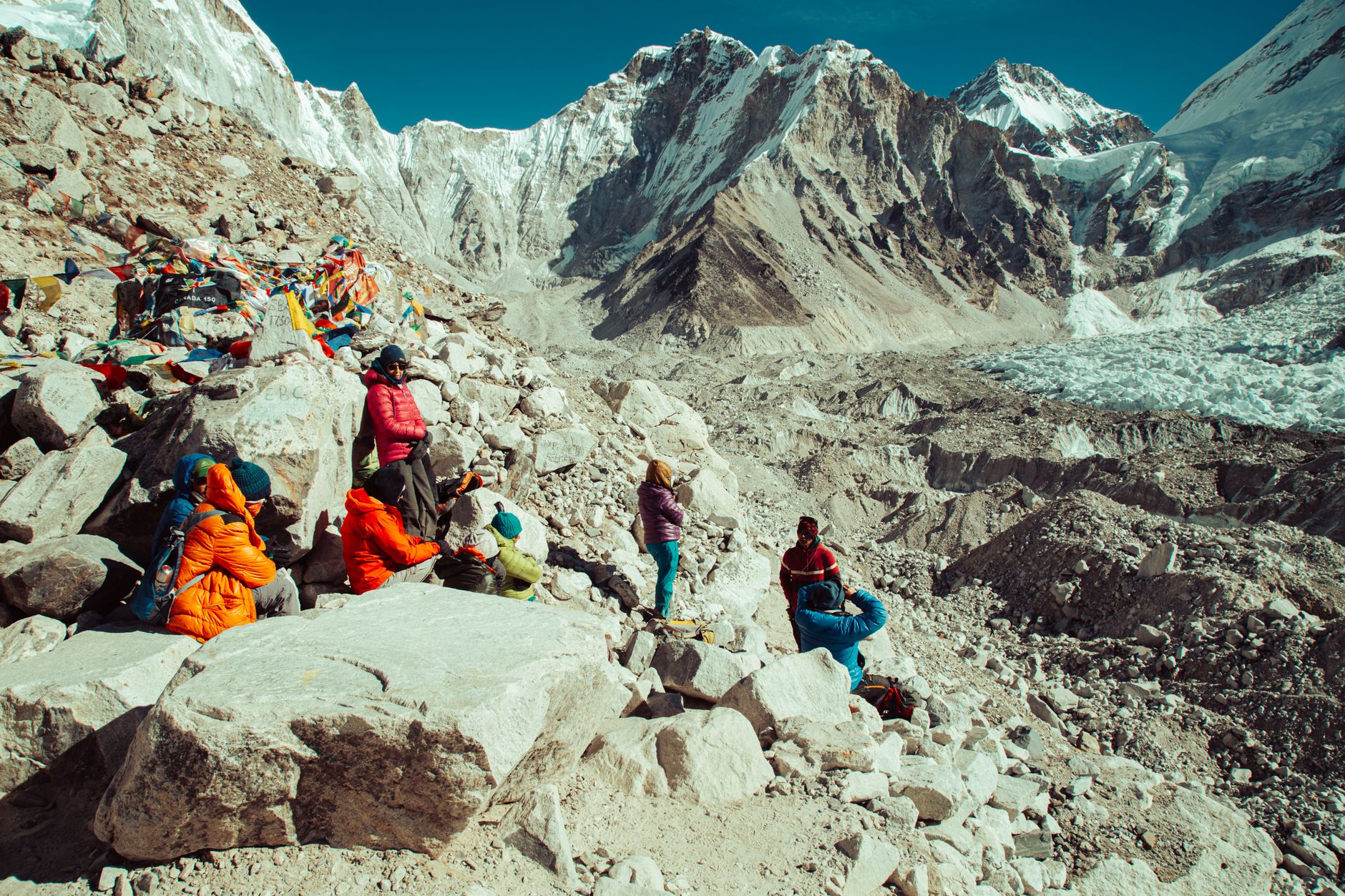
The trek follows the broad valley floor above Pheriche, home of the Himalayan Rescue Association aid post (4,240 m), to the small stop of Dughla (Thukla). From here a steep climb leads to the Thukla Pass, where stone memorials honour Sherpas, trekkers and climbers who lost their lives on Everest. Take a moment among the prayer flags and messages left by families and friends before continuing alongside the Khumbu Glacier moraine to Lobuche. The afternoon is free to rest, hydrate and enjoy views of Nuptse towering above.
Day highlights
-
Thukla Pass memorials
-
Khumbu Glacier moraine
Trek to Everest Base Camp
-
Max Altitude
5,364 m
-
Accommodation
Guesthouse (Basic Lodge/Community Lodge)
-
Meals
Breakfast, Lunch, and Dinner Included
Today is the day you finally reach Everest Base Camp. Your guide leads you alongside the Khumbu Glacier to Gorak Shep, where you drop your bags and have an early lunch. You then continue on to Everest Base Camp (5,364 m) at the foot of the Khumbu Icefall. The altitude gain from Gorak Shep is small, but the trail is rugged with plenty of short ups and downs over the moraine. It is demanding but very manageable with good hydration and the support of the trekking team. After photos and time to take it all in, you return to Gorak Shep (5,164 m) for the night.
Day highlights
-
Everest Base Camp
-
Khumbu Icefall views
Kala Patthar Sunrise and Descent to Pheriche
-
Max Altitude
5,545 m
-
Accommodation
Guesthouse (Basic Lodge/Community Lodge)
-
Meals
Breakfast, Lunch, and Dinner Included
The day begins before dawn with the climb to Kala Patthar (5,545 m), the highest point of the trek and the best viewpoint for Mount Everest and the surrounding Himalayan ranges, including Nuptse, Changtse and Pumori. Watching first light hit the summit of Everest is a moment most trekkers never forget. You then descend back to Gorak Shep for breakfast and lunch before heading down the valley past Lobuche and Thukla to Pheriche (4,240 m), where the thicker air makes for a well-earned night’s sleep.
Day highlights
-
Sunrise on Everest from Kala Patthar
-
Highest point of the trek
Trek Back to Namche Bazaar
-
Max Altitude
3,440 m
-
Accommodation
Guesthouse (Basic Lodge/Community Lodge)
-
Meals
Breakfast, Lunch, and Dinner Included
Retrace your steps down the valley, following the Imja Khola past Pangboche and Tengboche and down to the river at Phunki Thanga, before the final climb and traverse into Namche Bazaar. It is a long day, but with every step the air grows richer and your legs feel stronger. Back in Namche you can celebrate with a hot shower, a bakery treat and a comfortable night at the lodge.
Day highlights
-
Descent through Tengboche
-
Celebration evening in Namche
Trek to Lukla
-
Max Altitude
2,860 m
-
Accommodation
Guesthouse (Basic Lodge/Community Lodge)
-
Meals
Breakfast, Lunch, and Dinner Included
Walk another long stretch down the steep Namche hill, back across the suspension bridges and along the Dudh Koshi through Monjo and Phakding, then make the final climb to Lukla. This is your last night in the mountains, a good time to thank your guide and porters and share a farewell dinner with the team before the morning flight to Kathmandu.
Day highlights
-
Last views of the Dudh Koshi valley
-
Farewell dinner with the crew
Fly Back to Kathmandu
-
Max Altitude
2,860 m
-
Accommodation
Hotel
-
Meals
Breakfast Included
Relive the thrill of the mountain flight as you say farewell to the Lukla team and the peaks of the Everest region. Depending on the season, the flight lands in Kathmandu or in Ramechhap, from where we drive you back to Kathmandu. Our team transfers you to your hotel, and the rest of the day is free for rest, shopping or sightseeing. Weather in Lukla can delay flights, so this day also serves as a buffer before your international departure.
Day highlights
-
Scenic return flight
-
Free time in Kathmandu
Final Departure from Kathmandu
-
Max Altitude
1,350 m
-
Meals
Breakfast Included
- Transport Private car / jeep / van
After breakfast, and depending on your flight time, our team drops you at the international terminal of Tribhuvan International Airport for your flight home. We hope you leave with memories of Everest that last a lifetime, and we look forward to welcoming you back to Nepal.
Day highlights
-
Airport drop-off
Maps
Where this trip takes you.
Fixed Departures
Set group departures below. Private dates can be arranged on any day that suits you.
Oct 20 - Nov 2, 2026
-
 Group Joining
 -
 Guaranteed
From $1,650 /Person
Book nowNov 5 - Nov 18, 2026
-
Group Joining
-
Guaranteed
From $1,650 /Person
Book nowNov 20 - Dec 3, 2026
-
Group Joining
-
Guaranteed
From $1,650 /Person
Book nowMar 5 - Mar 18, 2027
-
Group Joining
-
Available
From $1,650 /Person
Book nowMar 20 - Apr 2, 2027
-
Group Joining
-
Available
From $1,650 /Person
Book nowApr 5 - Apr 18, 2027
-
Group Joining
-
Available
From $1,650 /Person
Book nowApr 20 - May 3, 2027
-
Group Joining
-
Available
From $1,650 /Person
Book nowMay 5 - May 18, 2027
-
Group Joining
-
Available
From $1,650 /Person
Book nowMay 20 - Jun 2, 2027
-
Group Joining
-
Available
From $1,650 /Person
Book nowSep 5 - Sep 18, 2027
-
Group Joining
-
Available
From $1,650 /Person
Book nowSep 20 - Oct 3, 2027
-
Group Joining
-
Available
From $1,650 /Person
Book nowAvailability
Join a set group departure, or ask us for a private date that suits you.
Didn’t find a suitable date? Contact us with your dates and preferences.
Inclusions & exclusions
What the trip price covers, and what to budget for separately.
What’s included
- Expert guidance – Certified, government-licensed trekking guide with deep local knowledge
- Nightly rest stops – Hotel in Kathmandu and cosy teahouse lodges throughout the trek
- Trail permissions – Sagarmatha National Park Entry Permit and Khumbu Pasang Lhamu Rural Municipality Permit fully arranged
- Three meals daily – Breakfast, lunch and dinner at mountain lodges during the trek
- Mountain flights – Kathmandu (or Ramechhap) to Lukla and back
- Transfers – Airport pick-up and drop-off and all ground transport to and from the Lukla flights
- Porter support – One porter shared between two trekkers
- Staff costs – Guide and porter wages, meals, accommodation and insurance
Not included
- International flights – Air travel to and from Nepal
- Nepal visa – On-arrival visa fee
- Personal purchases and city meals – Snacks, drinks, hot showers, charging, WiFi, laundry, lunch and dinner in Kathmandu
- Safety coverage – Travel insurance including helicopter evacuation up to 6,000 m
- Gratuities – Tips for your guide and porter team
- Equipment – Personal trekking gear rental or purchase
Why this trip stands out
-
 Stand at the foot of the world's highest mountain at Everest Base Camp (5,364 m).
 -
Watch sunrise light up Everest from Kala Patthar, the best viewpoint in the Khumbu.
-
Two built-in acclimatisation days give you a safer, more comfortable ascent.
-
Experience Sherpa culture in Namche Bazaar, Khumjung and Tengboche Monastery.
-
Permits, flights, lodges and a certified guide are all handled by the Elevate Trek team.
Good to know
Practical information to help you prepare for this trip.

The Journey to Lukla
Air traffic at Kathmandu’s main airport is very heavy, so in the busy spring and autumn seasons Lukla flights usually operate from Manthali airport in Ramechhap.
- The drive to Ramechhap: about 4 hours from Kathmandu through green hills, terraced farmland and traditional villages.
- The flight to Lukla: roughly 20 to 30 minutes from Ramechhap (about 35 to 40 minutes from Kathmandu) on a small Twin Otter or Dornier-type aircraft, with rolling hills giving way to jagged peaks.

Altitude & Acclimatisation
The trail climbs through three distinct zones.
- Lower trails: Lukla (2,860 m) with pine forest and rhododendrons; Namche Bazaar (3,440 m) is the first acclimatisation stop.
- Middle hills: Tengboche (3,860 m) is the spiritual heart of the Khumbu; by Dingboche (4,410 m) the landscape is scrub, rock and open pasture.
- High alpine zone: Lobuche (4,910 m) and Gorak Shep (5,164 m), where there is only about half the oxygen available at sea level. Walk slowly and stay hydrated.

Essential Packing Guide
Layering is the key to staying comfortable from warm valleys to freezing mornings.
- Layers: merino or synthetic base layer (never cotton), fleece or light down insulation, and a waterproof, windproof outer shell.
- Footwear: waterproof, broken-in trekking boots with ankle support, camp shoes for the evenings, and warm wool socks, always keeping a dry pair for sleeping.
- Accessories: sun hat and warm beanie, light gloves plus heavy waterproof gloves or mittens for the Kala Patthar morning, and UV-rated sunglasses.
- Health and hygiene: two 1-litre reusable bottles with purification tablets or a filter (plastic bottles are discouraged in the Khumbu), blister plasters, painkillers, throat lozenges, personal medication, high-SPF sunscreen and lip balm.

Permits
Two permits are required and both are included in your package.
- Sagarmatha National Park entry permit: NPR 3,000 plus VAT for foreign nationals.
- Khumbu Pasang Lhamu Rural Municipality permit: NPR 3,000 per person for the first 30 days, issued at Lukla or Monjo.
The TIMS card is not required in the Khumbu region.

Accommodation and Meals
You stay in a hotel in Kathmandu and in family-run teahouse lodges on the trail, usually in twin rooms with shared bathrooms at higher altitudes. Meals are taken from the lodge menu: dal bhat, noodles, pasta, potatoes, eggs and soups are common. Hot showers, charging and WiFi are available in most villages for a small extra fee.

Travel Insurance
Travel insurance covering trekking up to 6,000 m and emergency helicopter evacuation is compulsory. Please send us your policy details before the trek.
FAQs
Answers to the questions travellers ask us most about this trip.
Is the trek very difficult?
It is moderate to challenging, but not a technical climb. You do not need ropes or ice axes. The main challenge is the altitude, not the terrain, which is why our itinerary ascends gradually with two acclimatisation days.
Can a beginner do this trek?
Absolutely. If you have little hiking experience, build a few months of cardio training before you arrive, such as running, swimming, cycling or stair climbing, ideally with some long walks carrying a daypack.
When is the best time to go?
Spring (March to May) brings blooming rhododendrons and milder temperatures. Autumn (late September to November) offers the clearest skies and most stable weather. Early December is also possible but noticeably colder.
How high will we sleep?
The highest overnight stop is Gorak Shep at 5,164 m (16,942 ft), for one night only. The highest point you reach on foot is Kala Patthar at 5,545 m.
Do I need permits?
Yes. You need the Sagarmatha National Park entry permit and the Khumbu Pasang Lhamu Rural Municipality entry permit. The TIMS card is not required in the Khumbu region. Both permits are included in your package and our team arranges them using your passport details.
What about altitude sickness?
It is manageable with the right approach: ascend slowly, drink 3 to 4 litres of water a day, eat well and walk at a steady pace. Report any headache, nausea or dizziness to your guide immediately and never hide symptoms. Your guide will descend with you if needed.
Can I charge my phone or use the internet?
Yes, at extra cost. Teahouses charge a small fee for charging, and paid WiFi (such as Everest Link cards) is available in most villages. You can also buy an Ncell or Nepal Telecom (NTC) SIM card in Kathmandu for mobile data, which works in many places along the trail.
Is it safe for solo travellers?
Yes. Solo travellers can join one of our group departures or trek privately with their own guide and porter.
What happens in an emergency?
Helicopter rescue is the only fast way out of the high mountains, so travel insurance covering helicopter evacuation up to 6,000 m is required. Our guides carry phones, are trained in first aid and coordinate any rescue with our Kathmandu office.
Traveller reviews
Read what travellers say about this trip, or share your own experience.
Plan your journey
Price Starts From
$1,650
$1,850
-
 PAX
COST PER PERSON
PAX
COST PER PERSON
- 1 - 1 Traveler $1,650
- 2 - 5 Travelers $1,450
- 6 - 12 Travelers $1,350
**Discounts are solely based on your group size. We do not add anyone to your group.
-
Reserve now and pay later
-
Experienced & Knowledgeable Guides
-
Personalized & Customer-centric Service
-
Sustainable & Environmental Responsibility


Bishal plans these departures and usually replies within four hours.
 Free cancellation up to 21 days before departure
Let’s Plan Your Himalayan Journey
Whether it’s a trek, tour, or custom adventure, we’re here to help you plan the perfect experience in Nepal.ss


Send us an Inquiry
Tell us about your dream trip and we’ll get back to you within 24 hours.

Explore more packages
Carefully designed trekking itineraries led by experienced local guides, from beginner-friendly hikes to legendary Himalayan expeditions.
Explore all treks
Mera Peak Climbing
-
17 Days
-
Hard
-
6,476 m (21,247 ft)
Climb Mera Peak (6,476 m), Nepal's highest trekking peak, via the remote Hinku valley and...
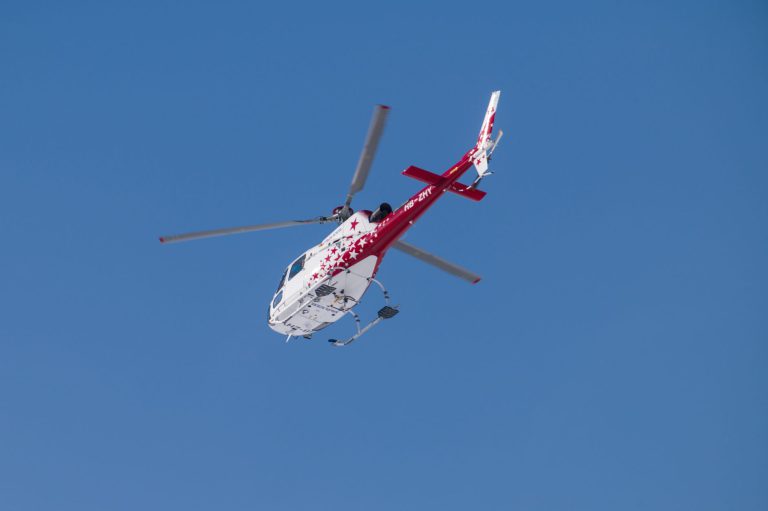
Everest Helicopter Tour
-
1 Day
-
Easy
-
5,545 m (18,192 ft)
See Everest up close in a single morning: fly from Kathmandu over the Khumbu, land...

Upper Mustang Circuit Trek
-
18 Days
-
Hard
-
4,280 m (14,042 ft)
A full loop of the old Kingdom of Lo: up the west bank via Dhakmar...

Everest Panorama Trek
-
10 Days
-
Medium
-
3,880 m (12,730 ft)
A short, lower-altitude taste of the Khumbu: Namche Bazaar, Tengboche Monastery and the Sherpa village...


