

Mera Peak Climbing
 4 spring departures left
-
 Hinku Valley, Everest Region, Nepal

Summit Mera Peak at 6,476 m

Five 8,000 m peaks from the top

Remote Hinku valley and Zatrwa La

Glacier skills training at Khare
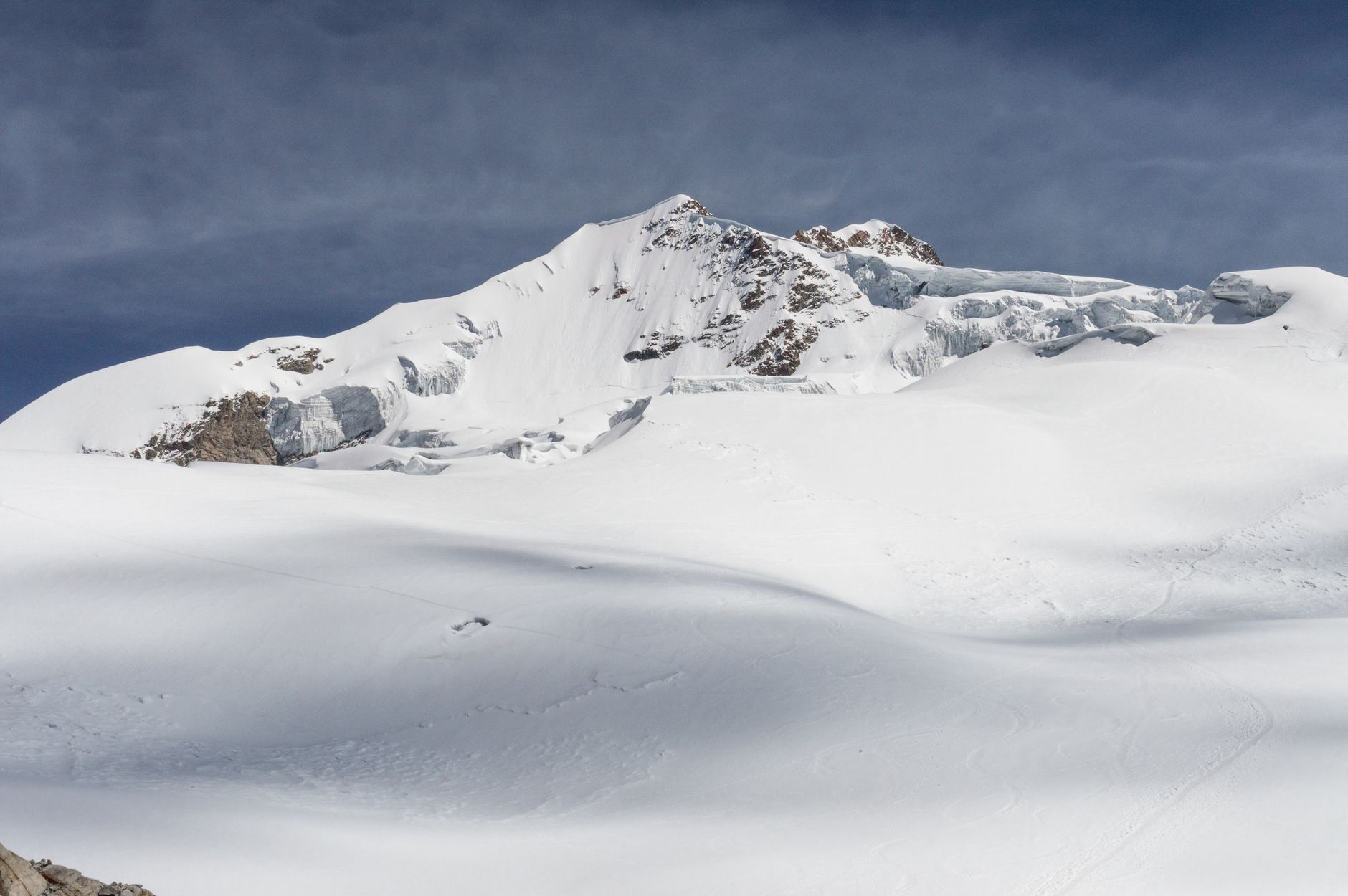
Mera Peak (6,476 m) is the highest of Nepal’s trekking peaks and one of the best introductions to Himalayan mountaineering. The climb itself is a non-technical glacier ascent, but its altitude and the remote approach make it a serious and deeply rewarding adventure.
From Lukla, the route crosses the Zatrwa La (4,610 m) into the wild, forested Hinku valley, far from the busy Everest trail. You follow the Hinku Khola past the yak pastures of Kothe and Thaknak to Khare, the last settlement below the Mera Glacier, where our climbing guide runs a training session on crampons, ice axe, harness and rope work.
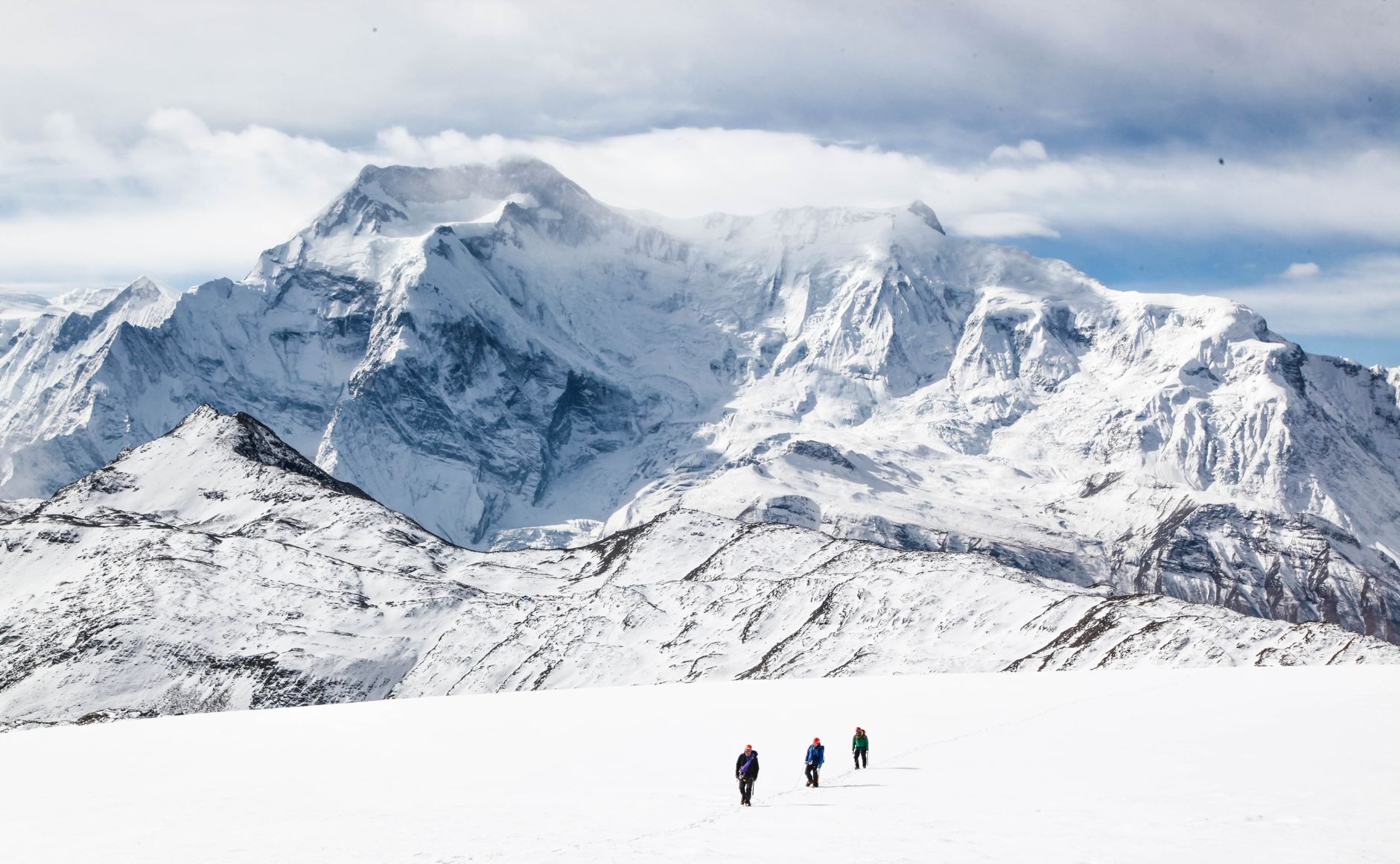
After crossing the Mera La you sleep at a rocky high camp around 5,780 m. Summit day starts in the dark and climbs steadily up the glacier, roped together, to Mera Central. From the top, the view takes in five of the world’s 8,000 m peaks: Everest, Lhotse, Makalu, Cho Oyu and Kangchenjunga.
This expedition suits fit trekkers with previous high-altitude experience; prior climbing experience helps but is not essential. The Elevate Trek team arranges your climbing permit, experienced climbing guide, group climbing gear, lodges and tented high camp, with a reserve day built in for weather.
-
 Duration
 17 Days
-
Nights
16 Nights
-
 Difficulty
 Hard
-
 Max.Elevation
 6,476 m (21,247 ft)
-
 Accomodation
 Hotel, Lodge, Tea house & Tented high camp
-
 Meals
Meals Breakfast, Lunch & Dinner during the trek and climb
-
 Group Size
 1 - 12 Travelers
-
 Best Season
 Apr - May, Oct - Nov
-
 Starting Point
 Kathmandu
-
 Ending Point
 Kathmandu
-
 Permit
 NMA Mera Peak Climbing Permit, Makalu Barun National Park Permit, Khumbu Pasang Lhamu Rural Municipality Permit
-
 Trip Type
 Private or Group
Mera Peak (6,476 m) is the highest of Nepal’s trekking peaks and one of the best introductions to Himalayan mountaineering. The climb itself is a non-technical glacier ascent, but its altitude and the remote approach make it a serious and deeply rewarding adventure.
From Lukla, the route crosses the Zatrwa La (4,610 m) into the wild, forested Hinku valley, far from the busy Everest trail. You follow the Hinku Khola past the yak pastures of Kothe and Thaknak to Khare, the last settlement below the Mera Glacier, where our climbing guide runs a training session on crampons, ice axe, harness and rope work.
After crossing the Mera La you sleep at a rocky high camp around 5,780 m. Summit day starts in the dark and climbs steadily up the glacier, roped together, to Mera Central. From the top, the view takes in five of the world’s 8,000 m peaks: Everest, Lhotse, Makalu, Cho Oyu and Kangchenjunga.
This expedition suits fit trekkers with previous high-altitude experience; prior climbing experience helps but is not essential. The Elevate Trek team arranges your climbing permit, experienced climbing guide, group climbing gear, lodges and tented high camp, with a reserve day built in for weather.


Itinerary
A 17-day expedition from Kathmandu via Lukla, Zatrwa La and the Hinku valley to Mera Peak's summit, with training, a reserve day and a return over the same pass.
Arrival in Kathmandu
-
 Max Altitude
1,350 m
Max Altitude
1,350 m
-
 Accommodation
Hotel
Accommodation
Hotel
- Travel Mode Car
Our team welcomes you at Tribhuvan International Airport and transfers you to your hotel in Kathmandu. After some rest, meet your climbing guide for an introductory briefing about the expedition, the route and what to expect on summit day. The evening is free to relax in Thamel or enjoy a welcome dinner.
Day highlights
-
 Airport welcome
 -
Expedition briefing
Preparation Day and Gear Check in Kathmandu
-
Max Altitude
1,350 m
-
Accommodation
Hotel
-
Meals
Breakfast Included
Today is for preparation. Your climbing guide checks your personal equipment, including mountaineering boots, down suit or jacket, gloves and sleeping bag, and helps you rent or buy anything missing in Thamel’s gear shops. Our team finalises your NMA climbing permit and park permits. If time allows, you can visit Boudhanath Stupa or Pashupatinath Temple.
Day highlights
-
Climbing gear check
-
Permit finalisation
Fly to Lukla, Trek to Chutanga
-
Max Altitude
3,430 m
-
Accommodation
Guesthouse (Basic Lodge/Community Lodge)
-
Meals
Breakfast, Lunch, and Dinner Included
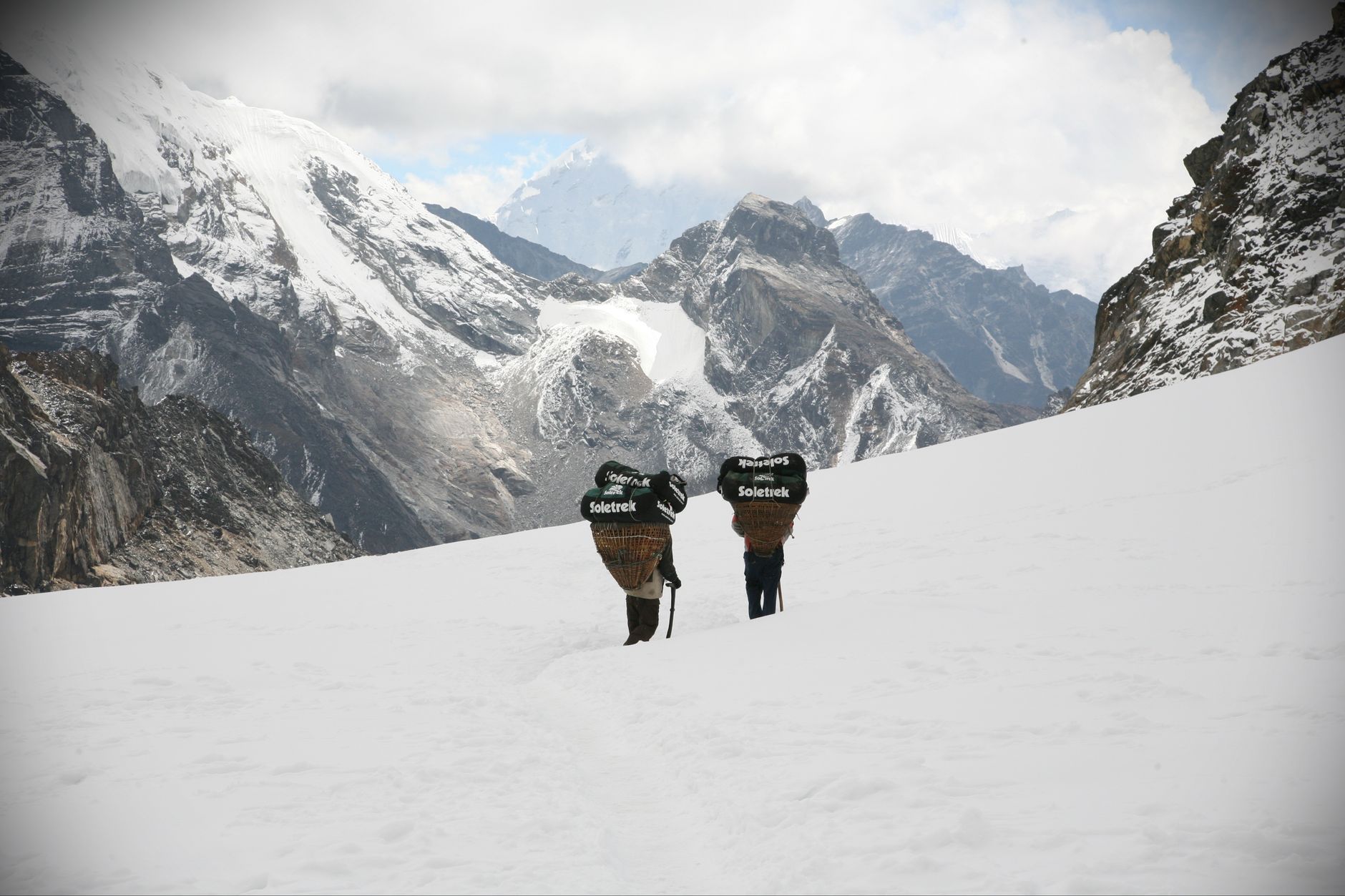
Take the early mountain flight to Lukla (2,860 m); in spring and autumn this may depart from Ramechhap after a drive from Kathmandu. Instead of following the main Everest trail north, you head east and climb through rhododendron and pine forest to the small yak herders’ settlement of Chutanga (3,430 m). The short day helps you start acclimatising before tomorrow’s pass.
Day highlights
-
Flight to Lukla
-
Forest trail off the main route
Cross Zatrwa La (4,610 m) to Thuli Kharka
-
Max Altitude
4,610 m
-
Accommodation
Guesthouse (Basic Lodge/Community Lodge)
-
Meals
Breakfast, Lunch, and Dinner Included
A steady climb over rocky terrain, marked by cairns and prayer flags, leads to the Zatrwa La (4,610 m), the pass separating the Khumbu from the Hinku valley. On a clear day the view extends over Karyolang, Numbur and the Lumding Himal. A short descent brings you to Thuli Kharka (4,300 m), a high pasture with a few teahouses. Walk slowly and drink plenty today: this is a big altitude gain.
Day highlights
-
Zatrwa La pass
-
First views into the Hinku
Trek to Kothe
-
Max Altitude
4,300 m
-
Accommodation
Guesthouse (Basic Lodge/Community Lodge)
-
Meals
Breakfast, Lunch, and Dinner Included
The trail descends through dense rhododendron, fir and bamboo forest into the Hinku valley, with first views of Mera Peak’s broad summit ahead. After a long, undulating descent you reach Kothe (3,600 m), a small settlement on the banks of the Hinku Khola. The lower altitude helps your body recover and acclimatise after the pass.
Day highlights
-
First view of Mera Peak
-
Hinku valley forests
Trek to Thaknak
-
Max Altitude
4,356 m
-
Accommodation
Guesthouse (Basic Lodge/Community Lodge)
-
Meals
Breakfast, Lunch, and Dinner Included
Follow the Hinku Khola upstream along the western bank, with Mera Peak and the Kusum Kanguru range above. On the way, stop at the small Lungsumgba Gompa, a 200-year-old shrine built beneath a rock face, before reaching Thaknak (4,356 m), a summer grazing area with simple lodges. The afternoon is free to rest and acclimatise.
Day highlights
-
Lungsumgba Gompa
-
Kusum Kanguru views
Trek to Khare
-
Max Altitude
5,045 m
-
Accommodation
Guesthouse (Basic Lodge/Community Lodge)
-
Meals
Breakfast, Lunch, and Dinner Included
A short but steep climb over the lateral moraine of the Dig Glacier leads to Khare (5,045 m), the last settlement below Mera Peak. Along the way you pass glacial lakes and enjoy dramatic views of the north face of Mera and the Charpate Himal. Khare’s lodges will be your base for the climb.
Day highlights
-
Mera Peak north face
-
Arrival at Khare
Acclimatisation and Climbing Training at Khare
-
Max Altitude
5,300 m
-
Accommodation
Guesthouse (Basic Lodge/Community Lodge)
-
Meals
Breakfast, Lunch, and Dinner Included
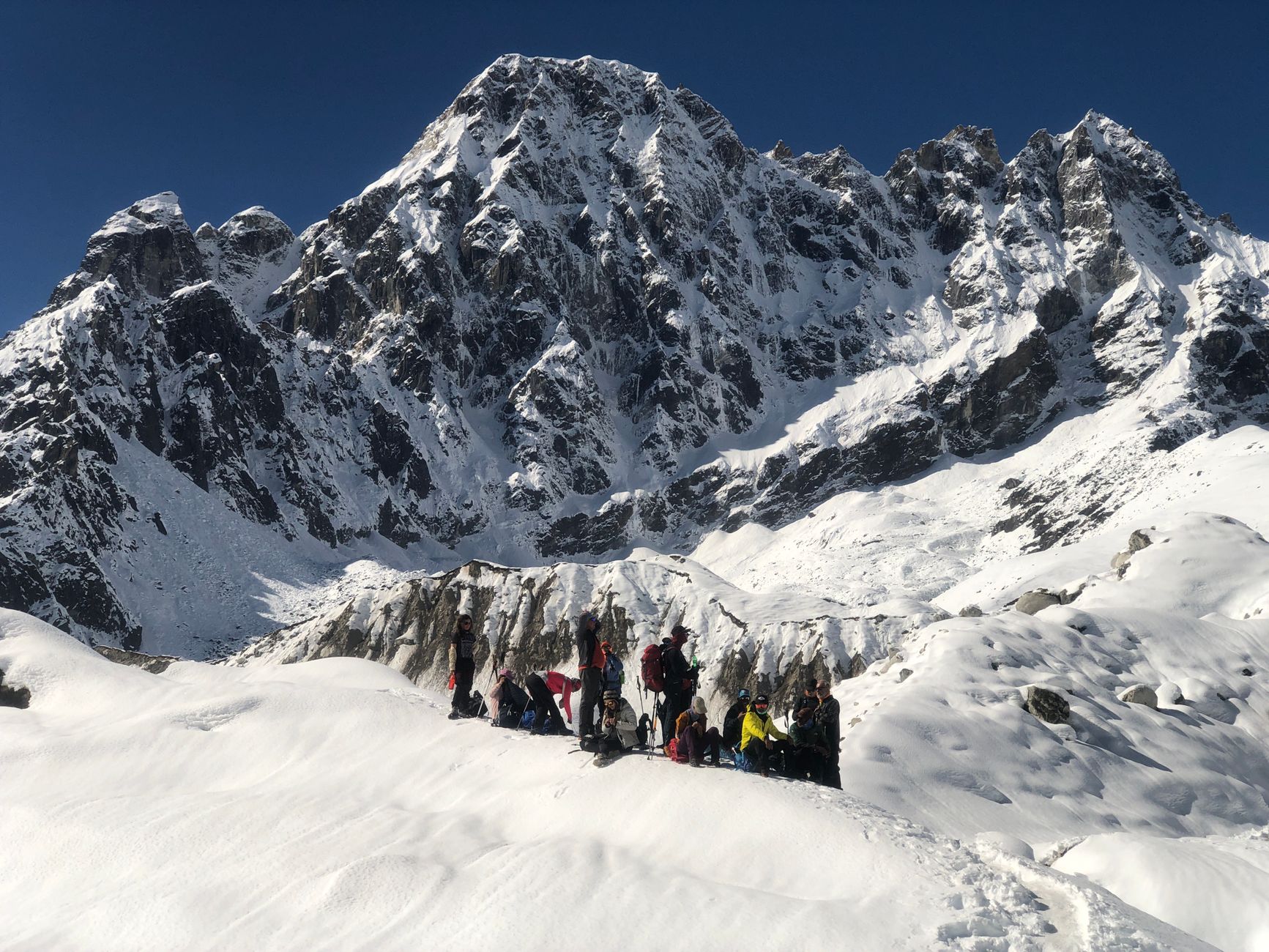
A vital day to acclimatise and prepare. In the morning, hike up towards Mera Base Camp for views and altitude gain. Later your climbing guide runs a pre-climb training session covering the use of crampons, ice axe, harness, ascender and rope techniques, including walking roped together on a glacier. Your guide also checks all the group and personal climbing equipment for the summit push.
Day highlights
-
Crampon and rope training
-
Climb high, sleep low
Climb to Mera High Camp (5,780 m)
-
Max Altitude
5,780 m
-
Meals
Breakfast, Lunch, and Dinner Included
- Climbing 6-7 hrs
Leave Khare on a steep, rocky trail to the edge of the Mera Glacier, then put on crampons and walk roped together across the glacier to the Mera La (5,415 m). From the pass, continue up the glacier to High Camp (about 5,780 m), set on a rocky outcrop beneath the summit slopes. The sunset over Everest, Makalu, Cho Oyu and Kangchenjunga from camp is spectacular. Eat, hydrate and sleep early.
Day highlights
-
Mera La crossing
-
Sunset from High Camp
Summit Mera Peak (6,476 m), Return to Khare
-
Max Altitude
6,476 m
-
Accommodation
Guesthouse (Basic Lodge/Community Lodge)
-
Meals
Breakfast, Lunch, and Dinner Included
Summit day begins around 1 to 2 am. Roped together with your guide, you climb steadily up the broad glacier by headtorch as the sky lightens behind Makalu. The final section below the summit dome is steeper, and a short fixed line may be used. From the top of Mera Central you look out over five 8,000 m peaks: Everest, Lhotse, Makalu, Cho Oyu and Kangchenjunga. After photos, descend carefully to High Camp and continue down to Khare for a well-earned rest.
Day highlights
-
Mera Peak summit
-
Five 8,000 m peaks
Reserve Day
-
Max Altitude
5,045 m
-
Accommodation
Guesthouse (Basic Lodge/Community Lodge)
-
Meals
Breakfast, Lunch, and Dinner Included
This contingency day allows for bad weather, a slower acclimatisation or any delay on the mountain. If the summit went to plan, use the day to rest at Khare or begin the descent at a gentler pace. Having this buffer greatly improves your chances of a safe, successful summit.
Day highlights
-
Weather buffer
-
Recovery
Trek to Kothe
-
Max Altitude
5,045 m
-
Accommodation
Guesthouse (Basic Lodge/Community Lodge)
-
Meals
Breakfast, Lunch, and Dinner Included
Retrace your steps down the Hinku valley through Thaknak to Kothe. The descent is easy on the lungs, and the forests and river feel lush after the high glaciers. Enjoy a relaxed evening celebrating the climb with your team.
Day highlights
-
Descent through the Hinku valley
Trek to Thuli Kharka
-
Max Altitude
4,300 m
-
Accommodation
Guesthouse (Basic Lodge/Community Lodge)
-
Meals
Breakfast, Lunch, and Dinner Included
Climb back out of the Hinku valley through rhododendron and fir forest to the high pasture of Thuli Kharka (4,300 m), positioning yourself for tomorrow’s crossing of the Zatrwa La.
Day highlights
-
Forest climb
-
Last night in the Hinku
Cross Zatrwa La, Trek to Lukla
-
Max Altitude
4,610 m
-
Accommodation
Guesthouse (Basic Lodge/Community Lodge)
-
Meals
Breakfast, Lunch, and Dinner Included
A short climb takes you back over the Zatrwa La (4,610 m) for a final look at the peaks, followed by a long, steep descent through Chutanga to Lukla. Share a farewell dinner with your guides and porters on your last night in the mountains.
Day highlights
-
Zatrwa La crossing
-
Farewell dinner
Fly Back to Kathmandu
-
Max Altitude
2,860 m
-
Accommodation
Hotel
-
Meals
Breakfast Included
Take the morning flight from Lukla to Kathmandu, or to Ramechhap followed by a drive in the busy seasons. After checking in to your hotel, enjoy a hot shower and a relaxed afternoon.
Day highlights
-
Mountain flight
Free Day in Kathmandu
-
Max Altitude
1,350 m
-
Accommodation
Hotel
-
Meals
Breakfast Included
A spare day in Kathmandu serves as a buffer against Lukla flight delays. If your flight ran on time, explore the city’s UNESCO World Heritage Sites such as Swayambhunath, Patan or Bhaktapur, or shop for souvenirs. In the evening, join our team for a farewell dinner.
Day highlights
-
Flight buffer
-
Kathmandu sightseeing
Final Departure
-
Max Altitude
1,350 m
-
Meals
Breakfast Included
- Travel Mode Car
Our team transfers you to Tribhuvan International Airport for your flight home, carrying the memory of standing on top of Nepal’s highest trekking peak.
Day highlights
-
Airport drop-off
Maps
Where this trip takes you.
Fixed Departures
Set group departures below. Private dates can be arranged on any day that suits you.
Oct 20 - Nov 5, 2026
-
 Group Joining
 -
 Guaranteed
From $2,650 /Person
Book nowNov 5 - Nov 21, 2026
-
Group Joining
-
Guaranteed
From $2,650 /Person
Book nowNov 20 - Dec 6, 2026
-
Group Joining
-
Guaranteed
From $2,650 /Person
Book nowApr 5 - Apr 21, 2027
-
Group Joining
-
Available
From $2,650 /Person
Book nowApr 20 - May 6, 2027
-
Group Joining
-
Available
From $2,650 /Person
Book nowMay 5 - May 21, 2027
-
Group Joining
-
Available
From $2,650 /Person
Book nowMay 20 - Jun 5, 2027
-
Group Joining
-
Available
From $2,650 /Person
Book nowAvailability
Join a set group departure, or ask us for a private date that suits you.
Didn’t find a suitable date? Contact us with your dates and preferences.
Inclusions & exclusions
What the trip price covers, and what to budget for separately.
What’s included
- Airport transfers – Arrival and departure pick-up and drop-off in Kathmandu
- Accommodation – Hotel in Kathmandu, teahouse lodges on the trek and tented high camp
- Meals – Breakfast, lunch and dinner during the trek and climb
- Mountain flights – Kathmandu (or Ramechhap) to Lukla and back, including ground transfers
- Permits – NMA Mera Peak climbing permit, Makalu Barun National Park permit and Khumbu Pasang Lhamu Rural Municipality permit
- Climbing guide – Experienced, licensed climbing guide for the summit, plus a trekking guide
- Porter support – Porters to carry luggage and camp equipment
- Group climbing gear – Fixed and main ropes, snow bars, tents and kitchen at high camp
- Garbage deposit – Environmental deposit and staff insurance and wages
Not included
- International flights – Air travel to and from Nepal
- Nepal visa – On-arrival visa fee
- Personal climbing gear – Mountaineering boots, crampons, ice axe, harness and helmet (rentable in Kathmandu)
- Kathmandu meals – Lunch and dinner in Kathmandu
- Personal expenses – Drinks, snacks, hot showers, charging, WiFi and laundry
- Travel insurance – Must cover climbing up to 6,500 m and helicopter evacuation
- Summit bonus and tips – Customary summit bonus and gratuities for guides and porters
Why this trip stands out
-
 Summit Nepal's highest trekking peak at 6,476 m.
 -
Enjoy one of the Himalaya's greatest views: five 8,000 m peaks from the top.
-
A non-technical glacier climb, ideal as a first Himalayan summit.
-
Trek through the remote, uncrowded Hinku valley.
-
Hands-on climbing training and a reserve day for a safer summit bid.
Good to know
Practical information to help you prepare for this trip.

Permits
All permits are included in the package:
- NMA Mera Peak climbing permit: USD 350 in spring, USD 175 in autumn, winter and summer (2025 rates).
- Makalu Barun National Park: NPR 3,000 for foreign nationals.
- Khumbu Pasang Lhamu Rural Municipality: local entry permit issued at Lukla.
- Garbage deposit: refundable environmental deposit per expedition.

Essential Packing Guide
Climbing gear plus warm trekking kit.
- Climbing: mountaineering boots, crampons, ice axe, harness, carabiners, descender, ascender and helmet.
- Warmth: expedition down jacket, insulated trousers, thermal layers, summit mittens and balaclava.
- Sleep: sleeping bag rated to -25°C.
- Eyes and skin: glacier glasses, SPF 50 sunscreen and lip balm.

Altitude & Acclimatisation
You climb from 2,860 m to 6,476 m. The itinerary follows a climb-high, sleep-low pattern with a training day at Khare.
- Drink: at least 4 litres of water a day.
- Listen: report headache, nausea or breathlessness at rest to your guide immediately.

Accommodation and Meals
You stay in simple teahouse lodges in the Hinku valley, with basic rooms and shared toilets, and one night in tents at High Camp, where our crew cooks hot meals.

Travel Insurance
Insurance covering climbing up to 6,500 m and emergency helicopter evacuation is compulsory. Please send us your policy details before departure.
FAQs
Answers to the questions travellers ask us most about this trip.
How difficult is Mera Peak?
The main challenges are altitude and endurance rather than technique. Summit day is 10 to 12 hours in very cold conditions, and you sleep at about 5,780 m the night before. The final summit slope is steeper and may use a short fixed rope.
What permits are required?
You need a Mera Peak climbing permit from the Nepal Mountaineering Association (NMA), a Makalu Barun National Park entry permit and the Khumbu Pasang Lhamu Rural Municipality permit. A refundable garbage deposit is also paid. Our team arranges all of these.
How much is the Mera Peak climbing permit?
Since the 2025 NMA fee revision, the permit costs USD 350 per person in spring (March to May) and USD 175 in autumn, winter and summer. It is included in the package price.
What gear do I need?
You need insulated mountaineering boots compatible with crampons, crampons, an ice axe, a harness with carabiners and a descender, a helmet, a down jacket, expedition gloves or mittens, and a sleeping bag rated to about -25°C. Most items can be rented in Kathmandu.
When is the best time to climb Mera Peak?
April to May and October to November offer the most stable weather. Spring is warmer, while autumn is colder but often clearer.
Is the Zatrwa La route safe for acclimatisation?
The Zatrwa La route gains height quickly, so we include a night at Chutanga before the pass, then descend to Kothe and climb gradually to Khare with a training and acclimatisation day there. Your guide monitors everyone closely and will adjust the plan if needed.
What is the success rate?
Success depends mostly on acclimatisation and weather. The reserve day in this itinerary gives you a second chance if conditions are poor on the planned summit day.
Traveller reviews
Read what travellers say about this trip, or share your own experience.
Plan your journey
Price Starts From
$2,650
$2,950
-
 PAX
COST PER PERSON
PAX
COST PER PERSON
- 1 - 1 Traveler $2,650
- 2 - 5 Travelers $2,390
- 6 - 12 Travelers $2,190
**Discounts are solely based on your group size. We do not add anyone to your group.
-
Reserve now and pay later
-
Experienced & Knowledgeable Guides
-
Personalized & Customer-centric Service
-
Sustainable & Environmental Responsibility


Bishal plans these departures and usually replies within four hours.
 Free cancellation up to 21 days before departure
Let’s Plan Your Himalayan Journey
Whether it’s a trek, tour, or custom adventure, we’re here to help you plan the perfect experience in Nepal.ss


Send us an Inquiry
Tell us about your dream trip and we’ll get back to you within 24 hours.

Explore more packages
Carefully designed trekking itineraries led by experienced local guides, from beginner-friendly hikes to legendary Himalayan expeditions.
Explore all treks
Everest Helicopter Tour
-
1 Day
-
Easy
-
5,545 m (18,192 ft)
See Everest up close in a single morning: fly from Kathmandu over the Khumbu, land...

Upper Mustang Circuit Trek
-
18 Days
-
Hard
-
4,280 m (14,042 ft)
A full loop of the old Kingdom of Lo: up the west bank via Dhakmar...

Everest Panorama Trek
-
10 Days
-
Medium
-
3,880 m (12,730 ft)
A short, lower-altitude taste of the Khumbu: Namche Bazaar, Tengboche Monastery and the Sherpa village...
Everest Three High Pass Trek
-
19 Days
-
Hard
-
5,545 m (18,192 ft)
The ultimate Khumbu circuit: cross Kongma La, Cho La and Renjo La, visit Everest Base...