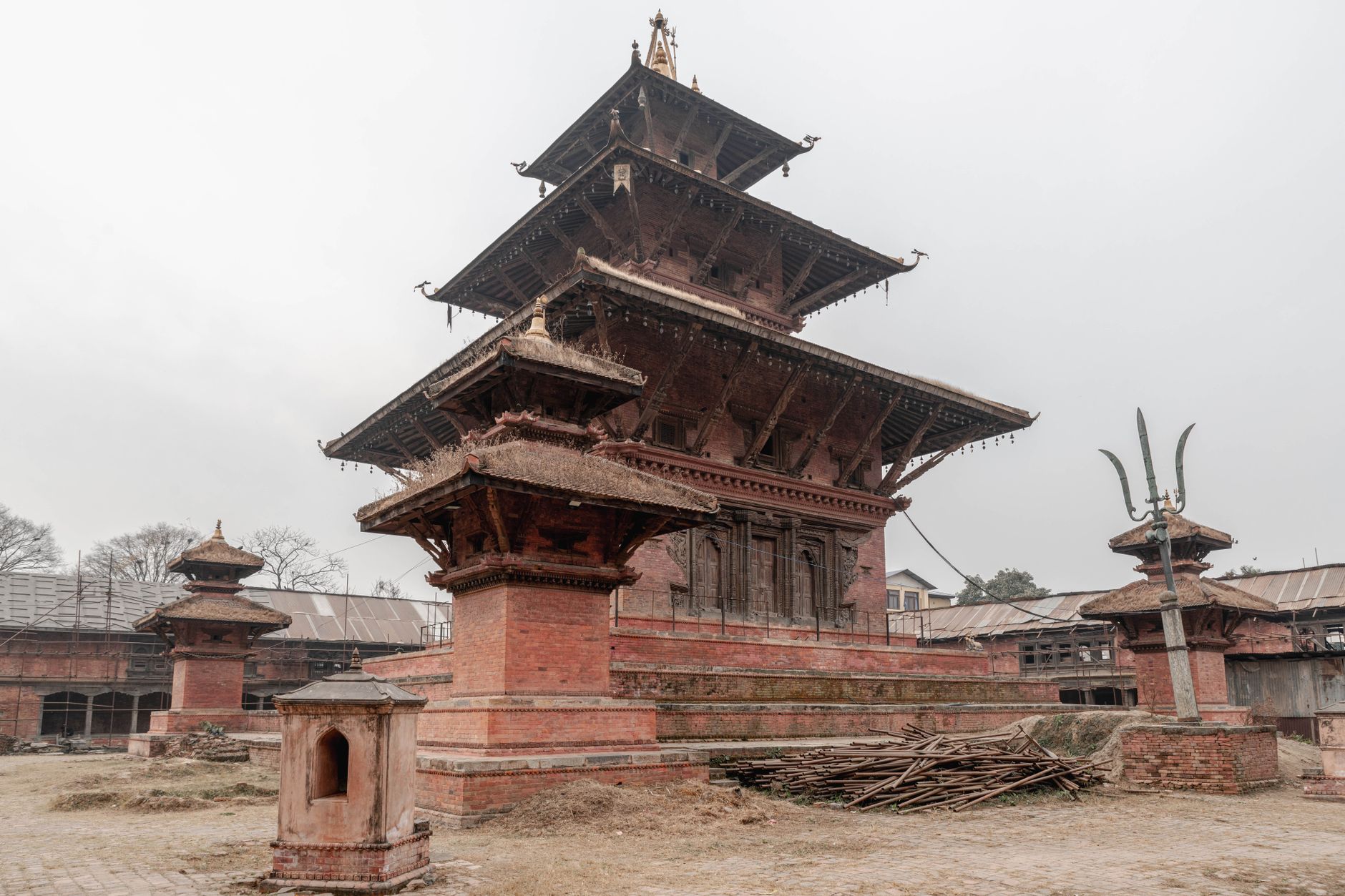


Kathmandu Durbar Square, also called Hanuman Dhoka after the palace gate, was the seat of the Malla and later Shah kings, and Nepal’s coronations were held here into the modern era. Its temples span roughly the 16th to 19th centuries. The square is a monument zone of the Kathmandu Valley UNESCO World Heritage Site and is still being restored after the 2015 earthquake.
Highlights include the towering Taleju Temple, the fierce Kal Bhairav relief and the rebuilt Kasthamandap pavilion, said to have given Kathmandu its name. In the Kumari Ghar, the carved home of the Kumari, the young living goddess sometimes appears at a window. The Hanuman Dhoka palace museum and the wide Basantapur square complete the picture.
Foreign visitors pay an entry fee of around NPR 1,000; keep the ticket, as it may be checked at several points. Allow two to three hours, ideally with a guide to decode the carvings and history. Morning is quieter and cooler. Photography of the Kumari is not allowed, and shoes come off before entering any shrine.