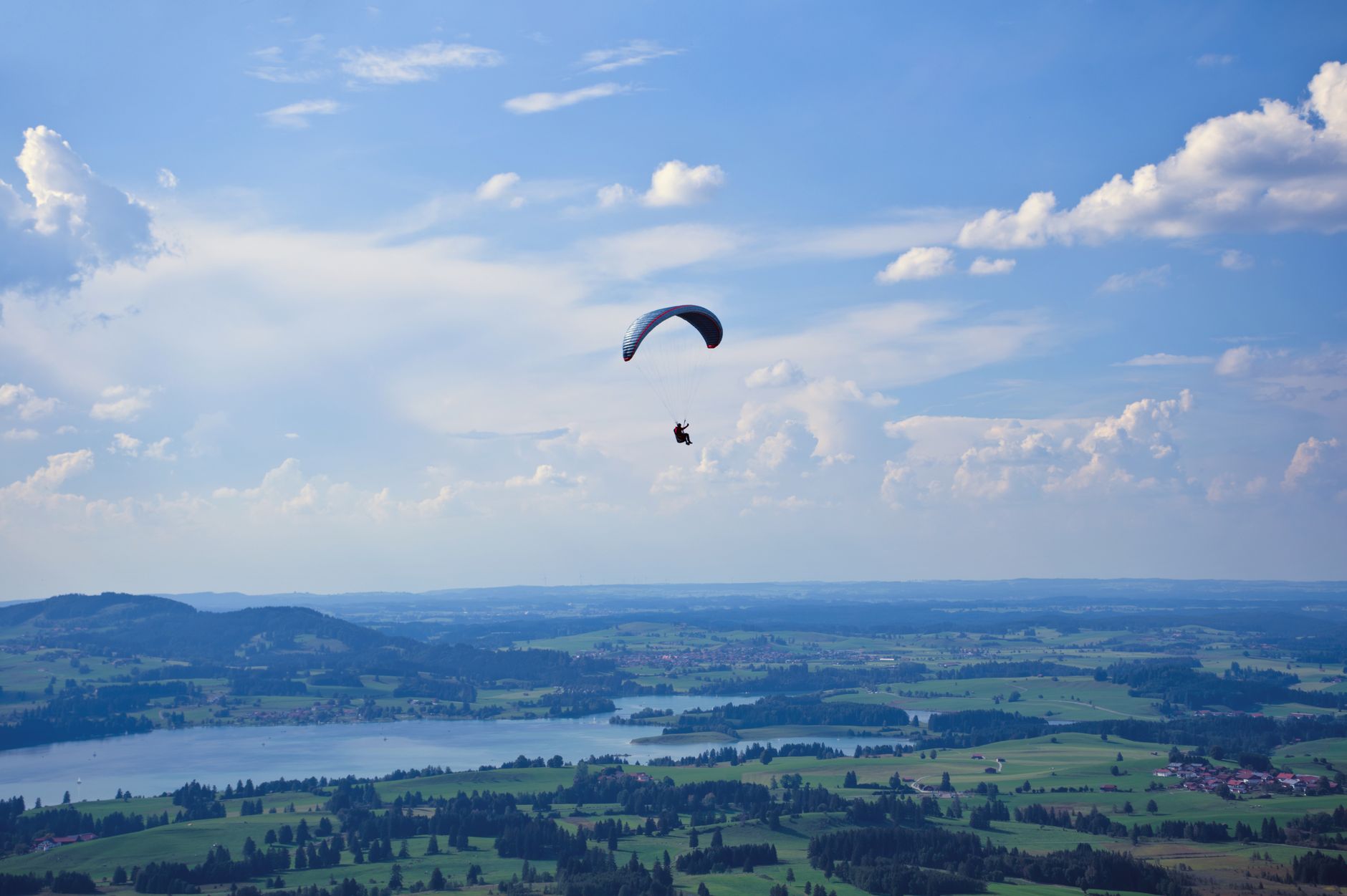


Few places in the world let you fly a paraglider with 7,000- and 8,000-metre peaks on the horizon and a lake beneath your feet. Pokhara is one of them. Tandem flights from Sarangkot have become one of Nepal’s signature experiences, and no previous flying experience is needed: you sit in front of a qualified pilot who handles everything.
We fly with our guests from Lakeside every season. Here is what to expect, from booking to landing.
Why Pokhara is special for paragliding
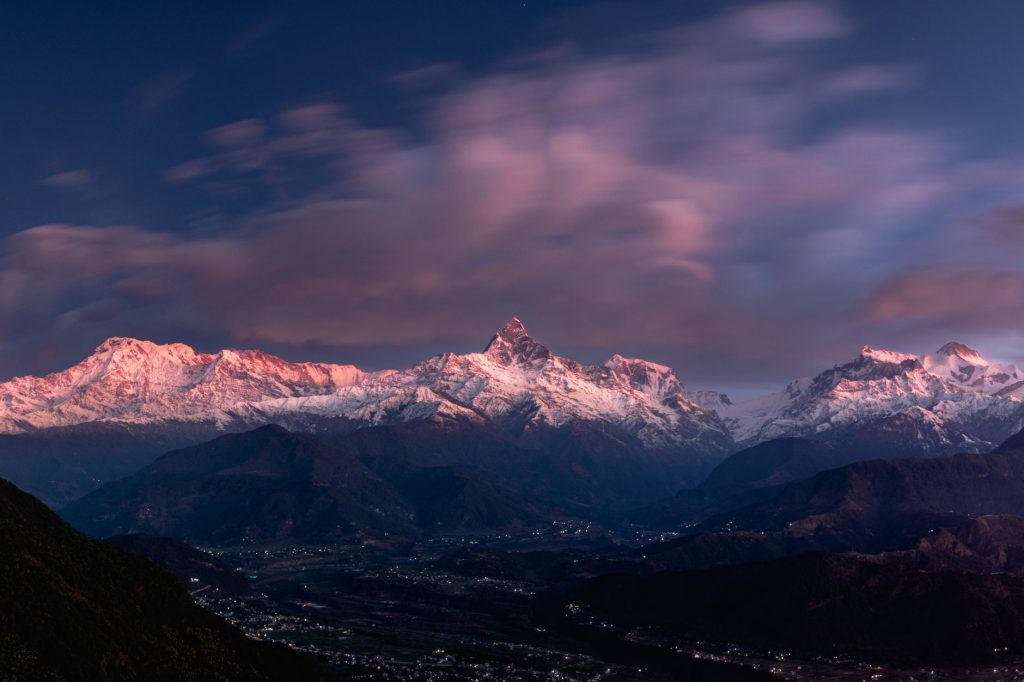
Pokhara sits at roughly 800 metres, at the foot of the Annapurna range and Machhapuchhre. Warm air rising from the valley floor and the lake creates reliable thermals for much of the year, so pilots can stay aloft and gain height rather than simply gliding down.
- Launch site at Sarangkot, a ridge at roughly 1,600 metres just above the city.
- Views of Annapurna South, Machhapuchhre, Annapurna II and, on clear days, Dhaulagiri.
- Landing on the lakeshore at Lakeside, metres from cafés and your hotel.
- Raptors such as kites and vultures often share the same thermals.
Pokhara has grown into one of the busiest commercial paragliding centres in Asia, and in season the sky above Sarangkot fills with colourful wings by late morning. Experienced solo pilots come from around the world to fly cross-country here in winter, which says a lot about the quality of the air.
For twenty minutes the mountains stop being a view and become your horizon. Most people land laughing, and most of them want to go again.
Best time to fly
Flights run for most of the year, but conditions vary with the season. Autumn, from late September to November, combines clear mountain views with stable air and is the most popular time. Winter (December to February) often gives the clearest skies of all, with cooler, gentler flying.
Spring brings stronger thermals and longer flights, though haze builds by late April and May. During the monsoon, from June to mid-September, flights still operate on many days between showers, but cancellations are more frequent and mountain views less likely.
Morning flights tend to have the best visibility; late-morning and early-afternoon slots usually have the strongest thermals. If you want the view, fly early. If you want height and duration, ask for a midday slot.
Weather decides everything. Pilots assess wind and cloud on the launch site each day, and flights may be delayed, moved to a different slot or cancelled at short notice. Build some flexibility into your Pokhara days, and avoid scheduling your flight on the morning you leave town.
What a tandem flight looks like
- Pick-up: a jeep collects you from your Lakeside hotel and drives up to Sarangkot, around 30–45 minutes.
- Briefing: your pilot fits the harness and helmet and explains the take-off: a few strong steps downhill until the wing lifts you.
- Flight: standard flights last about 20–30 minutes; longer cross-country options are available on good days.
- Landing: you glide in over Phewa Lake to the landing field in Lakeside. Most landings are a gentle sit-down or a few running steps.
The take-off is the only part that asks anything of you, and it lasts a few seconds. Lean forward, keep running when your pilot says so, and do not sit down until you are told. Once you are airborne, you settle back into the harness as if into a chair, and your pilot can hand you the brakes to steer for a few moments if you would like to try.
Most pilots carry a camera on a selfie pole and offer photo and video packages, so you can keep your hands free and simply enjoy the flight.
Safety, limits and choosing an operator
Paragliding has an excellent safety record when it is run professionally, and that is the deciding factor. Choose an operator that holds the necessary government licence, employs experienced, certified tandem pilots and maintains its equipment, including a reserve parachute on every flight.
- Ask how many years and tandem flights your pilot has logged.
- Check that the operator will cancel or delay if wind or cloud is unsuitable. Good operators do.
- Weight limits vary by operator and wing; tell us your weight when you book.
- Flights are generally not suitable during pregnancy or for anyone with serious heart, back or neck conditions.
- Check that your travel insurance covers paragliding as a tandem passenger.
Be wary of choosing purely on price. The cheapest flight in town may mean an overworked pilot flying back-to-back tandems all day, or a wing that should have been retired. A few dollars more buys a pilot who has time to brief you properly and the judgement to say no when conditions turn.

Motion sickness? If you are prone to it, tell your pilot before take-off and skip the spirals and wingovers. A smooth, scenic flight is still spectacular. Eat a light breakfast and avoid flying on an empty stomach.
Prices, booking and what to wear
At the time of writing, a standard 20–30 minute tandem flight in Pokhara generally costs between USD 65 and USD 100, depending on season, operator and whether photos and video are included. Longer flights cost more. Our Pokhara paragliding experience includes hotel transfers and a licensed pilot.
Who can fly?
Almost anyone in reasonable health can fly tandem. Children can often fly with parental consent once they are big enough for the harness, and older passengers fly regularly. You need to be able to take a few running steps on uneven ground for the take-off. If you have any doubts, tell us about your health when you book and we will check with the pilots.
Wear closed shoes with grip, long trousers and a light windproof layer: it is cooler at altitude than on the lakeshore. Sunglasses help, but secure them. Leave loose items in your hotel.
Paragliding is the most popular of our adventure activities in Pokhara. It combines well with a sunrise visit to Sarangkot or the World Peace Pagoda, a day on the lake, or a celebratory flight at the end of an Annapurna trek.